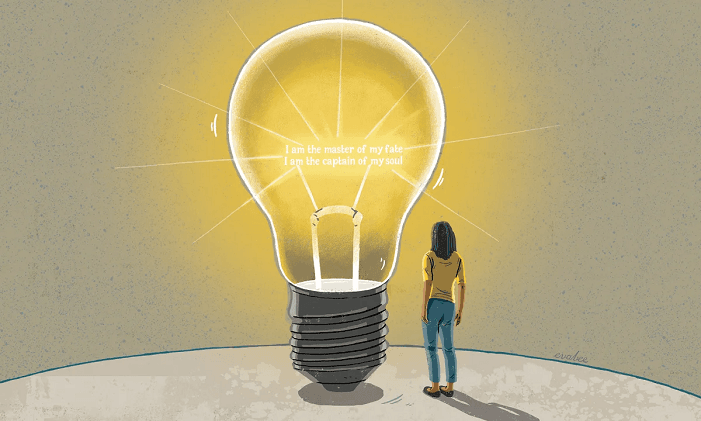
Uncertainty can make even simple choices feel heavy. A person may face a sudden loss, a career shift, a broken bond, or a future that no longer looks clear. Facts may explain what happened, but they rarely explain how it feels.
Poetry helps because it gives shape to mixed emotions. A short verse can hold fear, hope, doubt, and patience at once. It can name a feeling without forcing it into a neat answer.
This matters during change. The mind often races ahead, searching for control. Poetry slows that movement. It asks the reader to pause, notice one image, and stay with one thought.
A storm may stand for confusion. A road may suggest choice. A closed door may mark loss, while a window may hint at possibility. These images turn uncertain moments into something the reader can examine.
Poetry does not remove doubt. It helps people face it with more clarity.
Poetry Creates Order When Life Feels Unpredictable
Images Make Complex Feelings Easier To Understand
Poetry rarely explains emotions through long descriptions. Instead, it relies on images that readers already know.
A tree that bends in strong wind suggests resilience. A river that changes direction reflects adaptation. A mountain path with sharp turns represents uncertainty without needing to describe every emotion directly.
These familiar scenes allow readers to approach difficult experiences from a safer distance. The feeling remains real, but it becomes easier to examine.
Many people discover that a poem expresses what they could not say themselves.
Reading familiar themes of hope, disappointment, patience, or renewal creates a sense of connection. The reader recognizes that uncertainty has always been part of human experience, not a personal failure or an unusual event.
Readers interested in another example of how thoughtfully structured digital experiences guide people through gradual discovery and decision-making can explore tamasha instant game app. While the purpose differs from poetry, both rely on clear progression, focused attention, and carefully designed user experiences.
Reflection Often Leads To Better Decisions
Uncertain moments invite quick reactions.
Poetry encourages the opposite. It slows attention and creates space between emotion and action. That pause allows people to notice patterns, question assumptions, and consider different perspectives before deciding what comes next.
This quiet process does not remove uncertainty. It makes living with uncertainty more manageable.
Poetry Shows That Change Happens In Small Steps
Meaning Often Changes With Time
The same poem can feel different at different stages of life.
A verse that once seemed to describe disappointment may later speak about resilience. A line about waiting may first reflect uncertainty, then patience, and eventually acceptance. The words stay the same, but the reader changes.
This quality gives poetry lasting value. It grows alongside the person reading it.
Brief Verses Leave Room For Personal Experience
Poetry does not answer every question.
Instead, it offers a few carefully chosen words and invites the reader to complete the meaning. That openness makes each reading unique. Different people can find different truths in the same poem because each brings distinct memories, relationships, and experiences.
Rather than limiting interpretation, poetry encourages reflection that feels personal without becoming confusing.
Uncertainty Becomes Easier To Carry
Life rarely follows a straight path.
Plans change. Relationships evolve. Unexpected opportunities appear alongside unexpected setbacks. Poetry acknowledges this reality without pretending that every difficult moment has an immediate solution.
Instead of promising certainty, it offers perspective. It reminds readers that confusion, hope, loss, and renewal often exist together. Seeing those emotions expressed with honesty makes uncertain moments feel less overwhelming and more like natural parts of a continuing journey.
Poetry Remains Valuable Because It Gives Shape To The Unknown
Life does not provide clear answers at every turn. Unexpected change, loss, and uncertainty are part of every person’s experience. What often makes these moments difficult is not only what happens but also the struggle to describe what they feel like.
Poetry fills that gap. It transforms emotions into words that readers can recognize, revisit, and understand. Through simple images and carefully chosen language, it turns uncertainty into something that feels less distant and more manageable.
Its lasting strength comes from balance. Poetry does not ignore pain, nor does it promise easy solutions. Instead, it creates space for honest reflection. A single verse can acknowledge doubt while still leaving room for hope. That balance allows readers to engage with difficult emotions without becoming overwhelmed by them.
Another reason poetry continues to matter is its openness. Different readers may find different meanings in the same lines because every life follows a different path. As experiences change, familiar poems often reveal new insights. This ability to grow alongside the reader keeps poetry relevant long after it is first read.
Ultimately, poetry helps people navigate uncertain moments by slowing attention and encouraging thoughtful reflection. It reminds readers that change is rarely immediate and that understanding often develops one small realization at a time. Rather than eliminating uncertainty, poetry offers something equally valuable: a language that helps people move through it with greater clarity, perspective, and emotional insight.