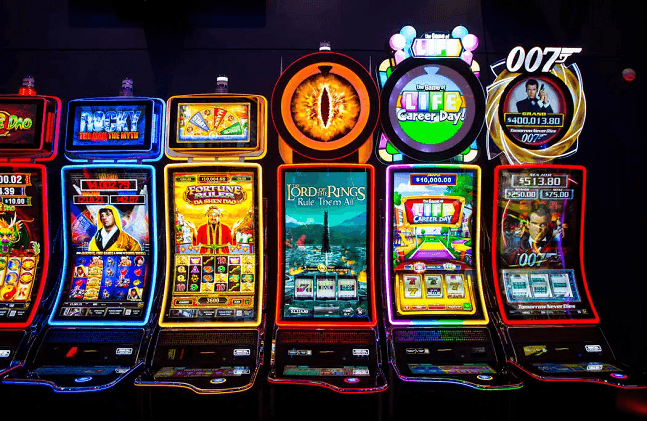
The origin of the slot machine is a fascinating journey that blends mechanical innovation, creativity, and a touch of chance. Today, slot machines are widely recognized as one of the most iconic forms of entertainment in gaming environments, both physical and digital. However, their story begins in the late 19th century with a brilliant inventor whose creation would change the landscape of leisure forever. Understanding who invented the first slot machine not only sheds light on its history but also reveals how simple ideas can evolve into global phenomena.
The Inventor Behind the First Slot Machine
The first true slot mahjong tile matching machine was invented by Charles Fey, a German-American mechanic living in San Francisco during the late 1800s. Fey was known for his technical skills and passion for creating mechanical devices. Around 1895, he developed a machine that would later be recognized as the foundation of modern slot machines.
His invention, called the Liberty Bell, featured three spinning reels with five symbols: horseshoes, diamonds, spades, hearts, and a cracked Liberty Bell. Unlike earlier gambling devices, Fey’s machine introduced an automatic payout system, which was revolutionary at the time. This innovation eliminated the need for human intervention, making gameplay faster and more engaging.
Fey’s Liberty Bell quickly gained popularity in local bars and saloons. Players were drawn to its simplicity and the excitement of spinning reels. The machine’s success marked the beginning of a new era in gaming history.
How the Liberty Bell Changed Entertainment
The Liberty Bell was more than just a mechanical device—it was a breakthrough in entertainment technology. Before Fey’s invention, gambling machines were complex and often required manual payouts. By simplifying the process, Fey made gaming more accessible to the general public.
The machine operated with a straightforward mechanism: players inserted a coin, pulled a lever, and watched the reels spin. If three Liberty Bell symbols aligned, the player received the highest payout. This easy-to-understand system contributed significantly to its widespread appeal.
As the machine became more popular, other inventors and manufacturers began creating their own versions. Although many attempted to replicate Fey’s design, his original concept remained the gold standard. The Liberty Bell essentially laid the groundwork for the slot machines we know today.
Evolution of Slot Machines After Fey
Following the success of the Liberty Bell, the slot machine industry began to expand rapidly. In the early 1900s, manufacturers started producing machines with new themes and features. Some machines replaced traditional symbols with fruit icons, giving rise to the “fruit machine” style that became popular worldwide.
Technological advancements also played a major role in the evolution of slot machines. Mechanical systems gradually gave way to electromechanical designs in the mid-20th century. These newer machines offered more complex gameplay and higher payouts, attracting even more players.
Eventually, the rise of digital technology transformed slot machines once again. Modern machines now use random number generators (RNGs) to ensure fairness and unpredictability. Despite these advancements, the core concept introduced by Charles Fey remains unchanged: spinning reels and the thrill of chance.
The Lasting Legacy of the First Slot Machine
The impact of Charles Fey’s invention cannot be overstated. His Liberty Bell machine set the standard for an entire industry that continues to thrive more than a century later. Today, slot machines are a central feature in entertainment venues around the world, as well as in online platforms.
Fey’s contribution slot qris terpercaya 24 jam goes beyond just creating a popular machine. He introduced a new form of interactive entertainment that combines simplicity with excitement. His work inspired generations of inventors and developers to push the boundaries of gaming technology.
In conclusion, the first slot machine was invented by Charles Fey in 1895, and his creation revolutionized the way people experience gaming. From the mechanical Liberty Bell to today’s digital innovations, the essence of his invention lives on. Understanding this history not only highlights the ingenuity of its creator but also shows how a single idea can evolve into a timeless global phenomenon.